

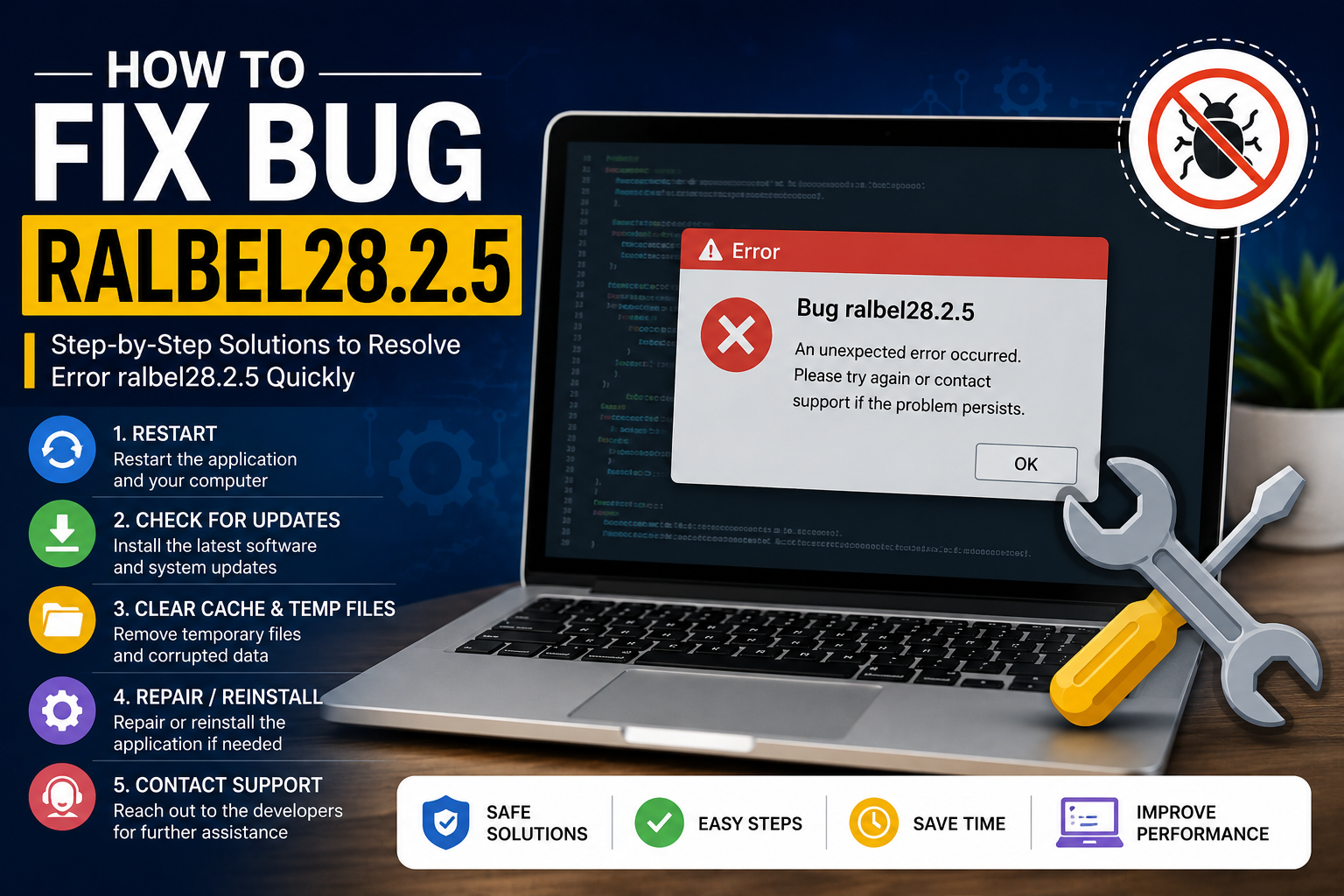

If you’ve searched for “How To Fix Bug ralbel28.2.5,” you’re likely dealing with an unexpected software error and looking for a quick solution. The honest answer is that there is currently very little publicly verified information about an error or software bug specifically identified as “ralbel28.2.5.” That means there isn’t an official fix that can be confirmed.
The good news is that most software bugs follow similar patterns. Whether you’re working with a desktop application, a business program, or an internal tool, the same troubleshooting process often solves the problem.
In this guide, I’ll walk you through practical steps you can take to diagnose and fix unknown software errors like ralbel28.2.5 while avoiding common mistakes that could make the situation worse.
What Is Bug ralbel28.2.5?
Based on publicly available information, ralbel28.2.5 appears to be an error identifier or version-related reference rather than a widely documented software bug.
Without official documentation, it’s impossible to verify:
- Which software generates the error
- What triggers it
- Whether it’s linked to a specific operating system
- The exact technical cause
Instead of relying on speculation, it’s better to follow a structured troubleshooting process.
Why Software Bugs Happen
Software errors can occur for many reasons, even in well-tested applications.
Some of the most common causes include:
- Corrupted installation files
- Outdated software versions
- Missing system updates
- Hardware compatibility issues
- Damaged configuration files
- Conflicting third-party applications
- Insufficient system permissions
Understanding these possibilities helps narrow down the cause before applying fixes.
Step 1: Restart the Application
This may sound simple, but restarting the program often resolves temporary issues.
When an application runs for a long time, memory usage or background processes can occasionally cause unexpected behavior.
Try this first:
- Close the application completely.
- Wait a few seconds.
- Reopen the program.
- Check whether the error still appears.
If the problem disappears, it may have been caused by a temporary software conflict.
Step 2: Restart Your Computer
A full system restart clears temporary files, resets active processes, and reloads essential system services.
I’ve seen many software problems disappear after a proper restart, especially after updates or new installations.
Before restarting:
- Save open work.
- Close unnecessary programs.
- Restart instead of shutting down if your operating system recommends it.
Step 3: Check for Software Updates
Developers regularly release updates that fix bugs, improve stability, and address security issues.
If you’re using the latest version of the software, verify that:
- Automatic updates are enabled.
- No pending updates are waiting.
- Your operating system is fully updated.
Even a minor update can resolve unexpected errors.
Step 4: Verify System Requirements
Some software errors appear because the computer doesn’t meet the minimum requirements.
Check:
- Operating system version
- Available storage space
- RAM
- Processor compatibility
- Graphics requirements (if applicable)
Running software on unsupported hardware can lead to unpredictable behavior.
Step 5: Review Error Messages Carefully
Don’t ignore the exact wording of an error message.
Even if “ralbel28.2.5” is unfamiliar, additional details may provide clues such as:
- Missing files
- Permission errors
- Failed updates
- Connection problems
- File access issues
Writing down the complete error message makes future troubleshooting much easier.
Step 6: Check Log Files
Many applications create log files that record technical events.
These logs may reveal:
- Startup failures
- Missing components
- Configuration errors
- Plugin conflicts
If you’re comfortable reviewing log files, they can provide valuable information before contacting technical support.
Step 7: Reinstall the Software
If the installation has become corrupted, reinstalling the application may resolve the issue.
A typical process includes:
- Uninstall the software.
- Restart the computer.
- Download a fresh installer from a trusted source.
- Install the latest version.
Be sure to back up important project files before removing the application.
Step 8: Disable Conflicting Programs
Sometimes another application is responsible for the problem.
Potential conflicts include:
- Antivirus software
- Firewall settings
- Background utilities
- File synchronization tools
- Older software versions
Temporarily disabling non-essential applications may help identify the source of the conflict.
Step 9: Scan Your System
Corrupted system files or malware can occasionally cause unusual software behavior.
Run:
- A full antivirus scan
- A malware check using trusted security software
- Operating system integrity checks, if available
Keeping your computer secure reduces the risk of unexpected software errors.
Step 10: Contact the Software Developer
If none of the previous steps solve the issue, contacting the software developer is often the best option.
When requesting support, include:
- Software version
- Operating system
- Error message
- Screenshots (if possible)
- Steps that reproduce the problem
Providing detailed information helps support teams diagnose issues more quickly.
Preventing Future Software Errors
Although not every bug can be avoided, several good habits reduce the likelihood of future problems.
Keep Software Updated
Install updates regularly to receive bug fixes and security improvements.
Back Up Important Files
Regular backups protect your work if software becomes unstable.
Avoid Unofficial Downloads
Only install software from trusted or official sources.
Monitor Storage Space
Applications often perform better when sufficient disk space is available.
Restart Periodically
Occasional system restarts help refresh background processes and improve stability.
Could ralbel28.2.5 Be an Internal Error Code?
It’s possible.
Many organizations use custom software that generates internal error codes not documented publicly.
If you’re seeing ralbel28.2.5 in workplace software, your company’s IT department or software vendor may have internal documentation explaining the error.
In that situation, internal support resources are usually more reliable than general internet searches.
Conclusion
Although there is currently no publicly verified documentation explaining Bug ralbel28.2.5, that doesn’t mean you’re out of options. Most software errors can be investigated using a logical troubleshooting process that includes checking updates, reviewing error messages, verifying system compatibility, reinstalling the software if necessary, and contacting the developer when needed.
Rather than trying random fixes from unreliable sources, take a structured approach. It saves time, reduces frustration, and increases the chances of resolving the issue without creating new problems.
If you found this article informative, feel free to check out our other articles as well.
FAQs
What is Bug ralbel28.2.5?
Based on currently available public information, ralbel28.2.5 appears to be an undocumented error identifier or software reference rather than a widely recognized bug.
Can restarting my computer fix software bugs?
Yes. Restarting clears temporary processes and often resolves minor software issues.
Should I reinstall the software?
If the installation may be corrupted and simpler troubleshooting steps haven’t worked, reinstalling can often solve the problem.
Is ralbel28.2.5 caused by malware?
There is no verified evidence linking ralbel28.2.5 to malware. However, scanning your system is always a good security practice when unexpected errors occur.
What should I do if none of these fixes work?
Contact the software developer or your organization’s IT support team and provide detailed information about the error, your system, and the troubleshooting steps you’ve already completed.