

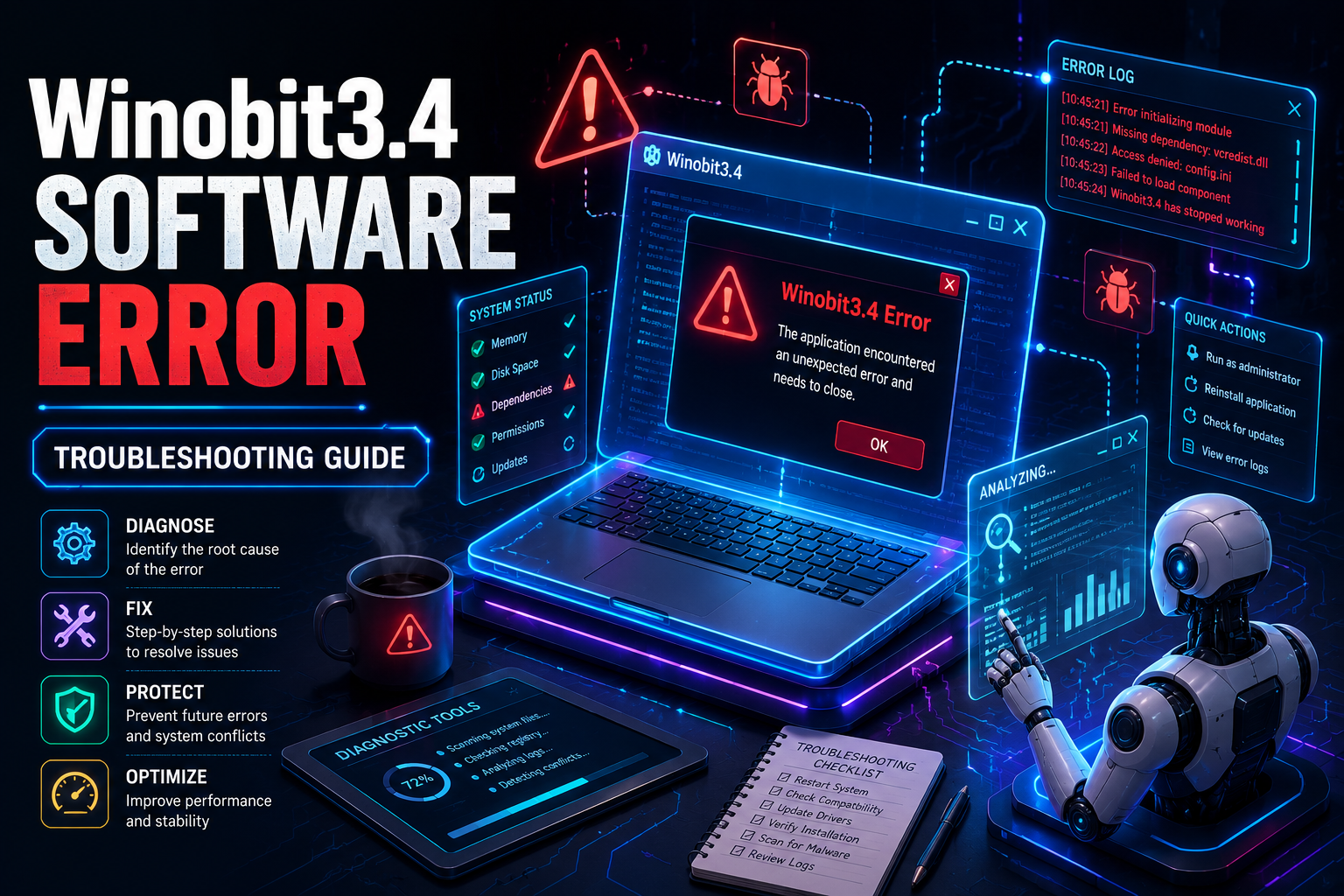

If you’ve searched for “Winobit3.4 software error,” you’re probably trying to solve a problem that’s preventing the software from working correctly. The quick answer is that there is very little publicly verified information about Winobit3.4 or its specific error messages. As a result, there is no official troubleshooting guide that identifies known error codes or their exact solutions.
The good news is that many software problems share common causes, regardless of the application. Whether the issue involves a failed installation, startup error, unexpected crash, or missing files, the troubleshooting process is often similar.
In this guide, I’ll walk through practical steps that can help resolve common software errors while explaining what you should check before making changes to your system.
Why Software Errors Happen
Software doesn’t usually fail without a reason. Most errors can be traced to one or more common issues.
Typical causes include:
- Corrupted installation files
- Incomplete software updates
- Missing system components
- Insufficient user permissions
- Compatibility problems
- Antivirus interference
- Damaged configuration files
Even reliable applications occasionally experience these problems after Windows updates or hardware changes.
Is There an Official Winobit3.4 Error Guide?
At the time of writing, no publicly available official documentation clearly explains Winobit3.4 error codes or troubleshooting procedures.
If you’re using Winobit3.4 as part of your workplace or organization, check whether your IT department or software provider has internal documentation.
Otherwise, the safest approach is to follow standard software troubleshooting practices rather than relying on unofficial fixes.
Common Signs of a Software Error
Although every application behaves differently, users often report problems such as:
- The software won’t open.
- It closes unexpectedly.
- Installation stops before completion.
- Error messages appear during startup.
- Features stop responding.
- Files fail to load or save.
- The program runs much slower than expected.
These symptoms don’t necessarily point to a serious problem. In many cases, a simple repair or reinstall resolves the issue.
Step 1: Restart Your Computer
It may sound obvious, but restarting Windows often clears temporary problems.
A reboot can:
- Release locked files
- Restart background services
- Clear temporary memory
- Complete pending updates
I usually try this before making any other changes because it’s quick and often effective.
Step 2: Verify the Installation
A damaged installation is one of the most common reasons software fails.
If you suspect installation issues:
- Download the installer again from a trusted source.
- Remove the existing installation if appropriate.
- Install the latest available version.
- Restart the computer afterward.
Avoid downloading installers from unofficial websites, as they may be outdated or modified.
Step 3: Check System Compatibility
Older software sometimes struggles with newer operating systems.
Verify that your computer meets the software’s requirements, including:
- Windows version
- Available storage
- RAM
- Processor architecture (32-bit or 64-bit)
Running incompatible software may lead to crashes or startup failures.
Step 4: Run as Administrator
Some applications require elevated permissions to access system files or write configuration data.
To test this:
- Right-click the program shortcut.
- Select Run as administrator.
- Check whether the software launches correctly.
If it does, permission settings may have been preventing normal operation.
Step 5: Check Security Software
Antivirus programs occasionally block legitimate applications if they detect unusual behavior.
Review your antivirus logs to see whether:
- The application has been quarantined.
- Important files were removed.
- Execution has been blocked.
Only restore files if you’re confident the software comes from a trusted source.
Step 6: Install Windows Updates
Microsoft regularly releases updates that improve compatibility and security.
Outdated system files can sometimes prevent applications from working correctly.
Open Windows Update and install any available updates before testing the software again.
Step 7: Review Error Messages Carefully
If Winobit3.4 displays an error message, don’t close it immediately.
Write down details such as:
- Error code
- Exact wording
- Time of occurrence
- What you were doing when it happened
This information makes troubleshooting much easier.
Quick Troubleshooting Table
| Problem | Possible Cause | Suggested Action |
|---|---|---|
| Software won’t start | Corrupted installation | Reinstall the application |
| Installation fails | Missing system files | Update Windows and try again |
| Frequent crashes | Compatibility issue | Check system requirements |
| Slow performance | Low available memory | Close unnecessary programs |
| Missing files | Antivirus interference | Review security software logs |
| Permission error | Restricted access | Run as administrator |
This checklist covers many of the issues users encounter with desktop applications.
When Should You Reinstall?
Sometimes reinstalling is the fastest solution.
Consider reinstalling if:
- The application crashes immediately after launching.
- Important files are missing.
- Recent updates failed.
- Configuration files appear damaged.
- Previous troubleshooting hasn’t worked.
Before uninstalling, back up any important project files if possible.
Tips to Prevent Future Software Errors
Good maintenance habits reduce the likelihood of future problems.
I recommend:
- Keeping Windows updated.
- Installing software only from trusted sources.
- Backing up important files regularly.
- Avoiding unnecessary system cleanup tools.
- Keeping antivirus software active.
- Updating hardware drivers when recommended.
These practices help improve overall system stability.
When to Contact Support
If you’ve tried the common fixes and the problem continues, contact the software provider if support is available.
Include:
- Windows version
- Software version
- Screenshots of error messages
- Steps that reproduce the issue
- Recent system changes
Providing detailed information often speeds up the support process.
Final Thoughts
Although there is limited publicly verified information about Winobit3.4 software errors, many application problems can still be resolved using standard troubleshooting methods. Restarting your computer, verifying the installation, checking compatibility, reviewing security software, and reinstalling the application when necessary are all practical steps that frequently solve software issues.
If the software is part of an organization or proprietary system, consult the official documentation or your IT department before making significant changes. A careful, methodical approach is usually the fastest path to identifying the root cause.
If you found this article informative, feel free to check out our other articles as well.
FAQs
What causes Winobit3.4 software errors?
There is no official public list of Winobit3.4 error causes. However, common software issues include corrupted installations, compatibility problems, missing files, or insufficient permissions.
Should I reinstall Winobit3.4?
If the software fails to start or repeatedly crashes after basic troubleshooting, reinstalling from a trusted source may help.
Is Winobit3.4 compatible with all versions of Windows?
Public documentation is limited, so check any available installation instructions or system requirements before installing it.
Can antivirus software cause application errors?
Yes. Security software can occasionally block or quarantine application files, preventing them from running correctly.
What should I do if none of these solutions work?
If the issue persists, gather details about the error and contact the software provider or your organization’s IT support for further assistance.