

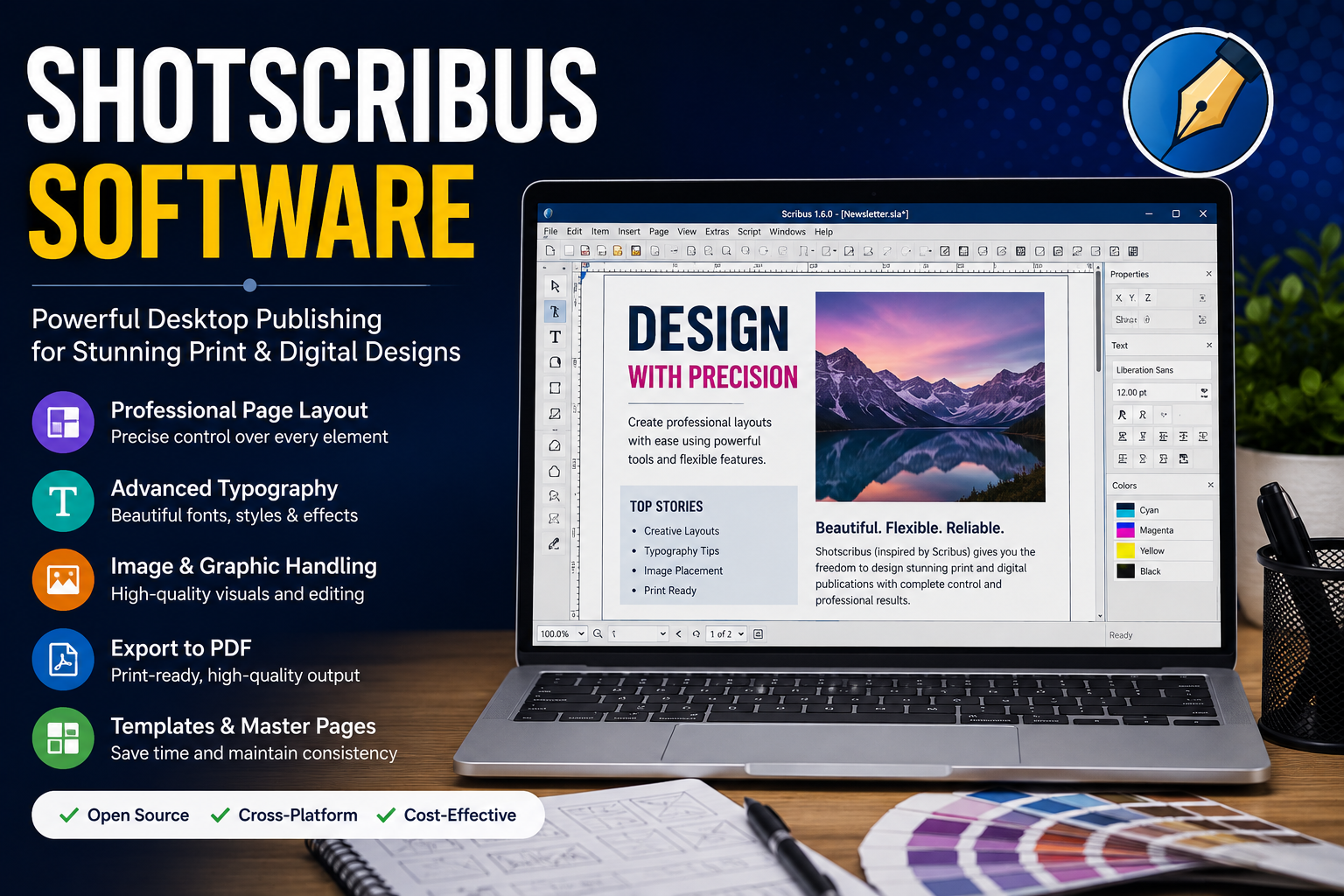

If you’ve searched for “Shotscribus software,” chances are you’re looking for information about what it is and whether it’s a useful desktop publishing (DTP) solution. The short answer is that Shotscribus is most commonly presented online as a resource discussing desktop publishing software, particularly Scribus and similar layout tools, rather than as a well-established standalone commercial application with independently verified documentation.
That can make things confusing. Some websites describe Shotscribus as if it’s software, while others use the name when comparing publishing tools or sharing tutorials.
In this guide, I’ll explain what Shotscribus appears to represent, how desktop publishing software works, what features you should expect from a DTP application, and how to decide whether this type of software fits your needs.
Understanding Desktop Publishing Software
Before looking specifically at Shotscribus, it’s helpful to understand desktop publishing.
Desktop publishing software is designed to create professional page layouts. Unlike word processors, DTP applications give users precise control over:
- Text placement
- Image positioning
- Typography
- Page grids
- Margins
- Print-ready documents
These tools are commonly used for:
- Books
- Magazines
- Newspapers
- Brochures
- Flyers
- Posters
- Product catalogs
- Business reports
Instead of simply typing text onto a page, desktop publishing focuses on visual presentation.
What Is Shotscribus Software?
Based on publicly available information, Shotscribus appears to be closely associated with educational content about desktop publishing rather than a widely documented software product with verified developer information or official release documentation.
Several online articles use the name while discussing professional page layout software and compare free and commercial publishing applications.
For that reason, anyone researching Shotscribus should verify exactly what software is being referenced before downloading or installing anything.
Why People Search for Shotscribus
There are several reasons this keyword has become popular.
Learning Desktop Publishing
Many users simply want an easier way to understand page layout software.
Searching for Alternatives
Some people are comparing free publishing software with commercial solutions.
Download Queries
Others may be looking for installation guides or tutorials.
Curiosity
Unique software names naturally attract attention, especially when they appear in technology blogs or online discussions.
Features You Should Expect in Good DTP Software
Whether you’re using Scribus, Adobe InDesign, Affinity Publisher, or another layout application, most professional publishing software offers similar core features.
Flexible Page Layout
You should be able to place text and graphics exactly where you want them.
Typography Controls
Professional layout software includes options for:
- Font selection
- Line spacing
- Kerning
- Paragraph styles
- Character formatting
These controls help produce polished publications.
Master Pages
Master pages allow repeated elements—such as page numbers, headers, and logos—to appear consistently throughout a document.
High-Quality PDF Export
Most publishing projects eventually become PDF files for printing or digital distribution.
Reliable export options are an important feature.
Image Management
Good publishing software lets users:
- Resize images
- Position graphics precisely
- Wrap text around objects
- Maintain image quality
These capabilities are essential for professional layouts.
Who Can Benefit from Publishing Software?
Desktop publishing isn’t limited to professional designers.
Many different users benefit from it.
Small Business Owners
Businesses often create:
- Marketing brochures
- Flyers
- Menus
- Product sheets
Students
Academic posters and research presentations frequently require page layout tools.
Self-Publishing Authors
Book authors often use DTP software before sending manuscripts to printers.
Nonprofit Organizations
Community newsletters and event materials are common publishing projects.
How to Evaluate Unfamiliar Software
Whenever I encounter software I’ve never used before, I avoid installing it immediately.
Instead, I follow a simple checklist.
Verify the Source
Only download software from trusted websites.
Read Available Documentation
User guides reveal a great deal about how software actually works.
Check Community Feedback
User experiences often highlight strengths and weaknesses that official marketing doesn’t mention.
Reddit discussions about Scribus, for example, frequently praise its capabilities while noting that it has a steeper learning curve than some commercial alternatives.
Confirm Compatibility
Always verify that the software supports your operating system.
Scan Installation Files
Running antivirus software before installation is a good habit regardless of the application.
Advantages of Desktop Publishing Software
Modern DTP software offers several important benefits.
Better Design Control
Every element can be positioned precisely.
Professional Print Output
Publishing applications are designed for commercial-quality printing.
Reusable Templates
Templates speed up future projects.
Consistent Branding
Businesses can maintain consistent fonts, colors, and layouts across multiple documents.
Possible Challenges
No software is perfect.
Users may encounter:
- Learning curves
- Complex interfaces
- Large project files
- Compatibility issues
- Printing setup questions
Fortunately, tutorials and documentation help reduce these challenges over time.
Tips for Beginners
If you’re just starting with desktop publishing, don’t try to learn everything at once.
Instead:
- Begin with simple one-page documents.
- Learn how text frames work.
- Practice placing images.
- Save your work regularly.
- Experiment with page layouts.
Small projects build confidence much faster than jumping directly into large publications.
Best Practices for Safe Downloads
Whenever researching software associated with unfamiliar names like Shotscribus, remember these safety tips:
- Download only from official or trusted sources.
- Avoid websites offering modified installers.
- Verify digital signatures when available.
- Keep your antivirus software updated.
- Read installation prompts carefully.
These habits help protect your computer regardless of the software you’re installing.
Final Thoughts
The keyword “Shotscribus software” often leads users to discussions about desktop publishing and page layout rather than a clearly documented standalone software product. While publicly verified information about Shotscribus itself is limited, understanding how desktop publishing software works helps you evaluate any tool more confidently.
Whether you’re designing a brochure, building a magazine, or preparing a book for print, choosing reliable publishing software—and downloading it from trusted sources—is far more important than focusing on a name alone.
If you’re new to desktop publishing, start with small projects, learn the fundamentals, and gradually build your skills. A strong understanding of layout principles will benefit you regardless of which application you eventually choose.
If you found this article informative, feel free to check out our other articles as well.
FAQs
What is Shotscribus software?
Publicly available information suggests Shotscribus is primarily associated with content about desktop publishing rather than a clearly documented standalone software product.
Is Shotscribus free?
There is no independently verified information confirming that Shotscribus itself is distributed as standalone software.
What is desktop publishing software used for?
Desktop publishing software is used to create books, magazines, brochures, newsletters, posters, and other professionally designed documents.
Is desktop publishing difficult to learn?
Beginners may need some practice, but starting with simple projects makes the learning process much easier.
How can I safely download publishing software?
Always use trusted sources, verify the developer, review documentation, and scan downloaded files before installing them.